AT A GLANCE
Industry: HVAC service
Platform: Microsoft Dynamics 365 Field Service
Capability: Custom Quote → Work Order conversion with Incident Types, related equipment, and a one-click generation button
Outcome: Faster quote-to-dispatch turnaround, reduced manual effort, and consistent service execution
For a growing HVAC service provider running Dynamics 365 Field Service, the gap between an approved customer quote and an actionable work order was where time, accuracy, and customer experience leaked. Quotes were detailed and well-structured; turning them into work orders was largely manual. This case study walks through how MTC closed that gap with a tailored quote-to-work-order automation built natively in Dynamics 365 Field Service.
Client Overview
The client is an HVAC service business that uses Dynamics 365 Field Service to manage everything from installation jobs to preventive maintenance contracts. Their sales and service teams routinely prepare detailed quotes covering installation, repair, and maintenance work — and once a quote is approved, that scope needs to become a dispatchable work order quickly and accurately.
Before the engagement, the conversion step was manual. Sales prepared the quote, service operations rekeyed the relevant lines into a new work order, and field teams worked from whatever made it across the handoff. The result was delays, duplicate effort, and an unnecessary error surface between sales and field service.
The Business Challenge
The client wanted a way to turn an approved quote into a work order while preserving the service scope already defined during quoting. Their specific requirements included:
- Use Incident Products and Incident Services as the basis for quote lines, so quoted scope aligned to defined service templates
- Allow service planners to associate one or more Incident Types with a quote
- Automatically surface the customer’s related equipment / assets once an incident type was selected
- Generate a Work Order directly from the quote, with required details, products, and services carried forward
Out of the box, Dynamics 365 Field Service does not support this exact quote-to-work-order flow. The native quote model and the work order model are structurally separate, and the relationships the client needed between Quote and Incident Type did not exist. A configuration-only approach was not going to deliver the outcome.
The Solution
MTC designed and built a tailored solution inside Dynamics 365 Field Service that bridges Quote Management and Work Order creation. The solution has five components.
1. Custom N:N relationship between Quote and Incident Type
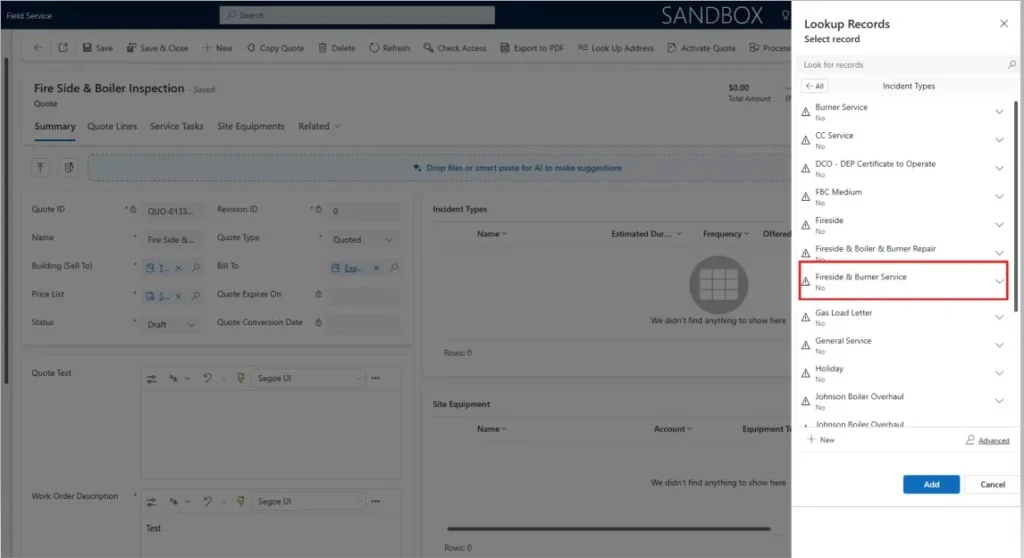
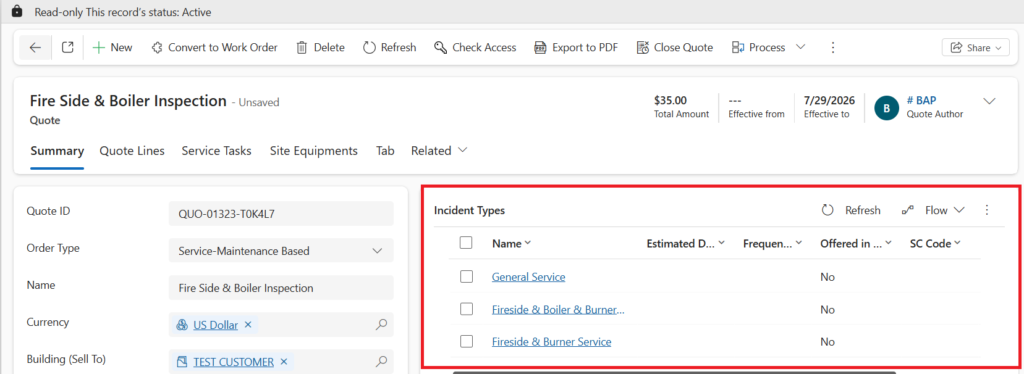
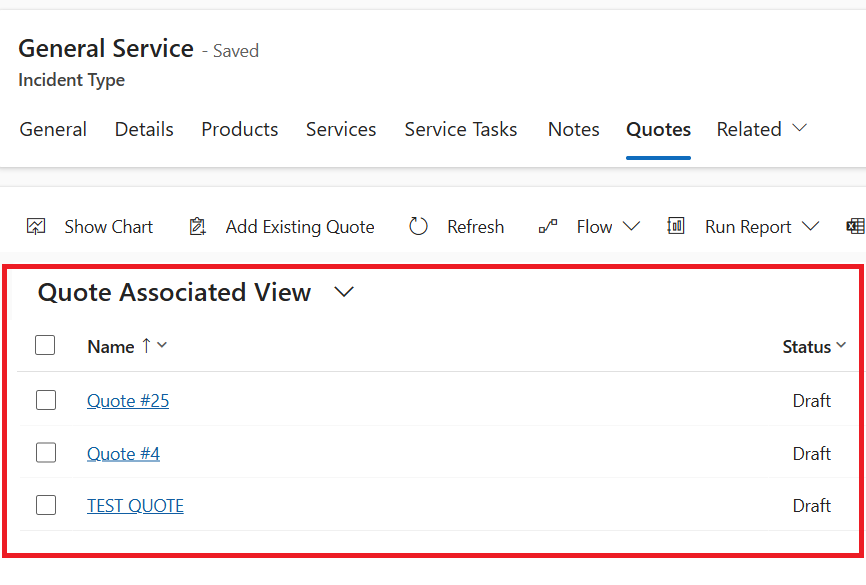
MTC created a many-to-many (N:N) relationship between Quote and Incident Type. This gave users the flexibility to associate one or multiple incident types with a single quote, depending on the nature of the HVAC job — for example AC installation, preventive maintenance, compressor replacement, or duct inspection.
To make this user-friendly, an Incident Type sub-grid was added directly on the Quote form. Service planners can link the relevant service templates while preparing or reviewing the quote, in the same form they are already working in.
2. Related equipment visibility on the quote
Once an Incident Type was associated with the quote, the system displayed the related customer equipment for the selected service account in a separate sub-grid. This gave service coordinators immediate visibility into the assets installed at the customer site — rooftop units, split AC systems, chillers, thermostats, air handlers — so they could confirm the quote was tied to the correct equipment before it became a work order.
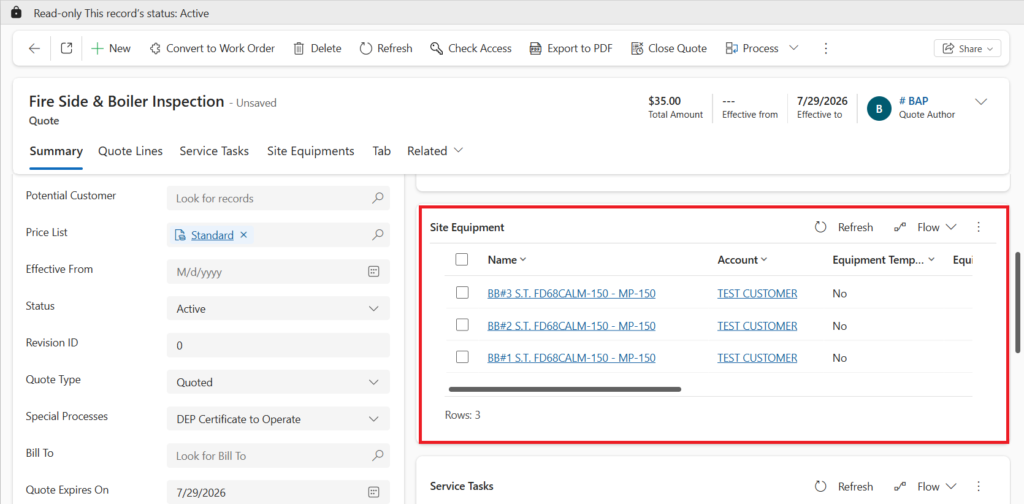
This is the same asset context the Dynamics 365 Field Service mobile app surfaces to technicians on the day of the job. Surfacing it during quoting closes the loop between sales context and field context. (For more on how technicians use that asset context, see our Field Service mobile app technician’s guide.)
3. Quote lines driven by Incident Products and Incident Services
The client wanted quote lines to reflect the structured service content already defined in Field Service, not free-text descriptions. MTC leveraged Incident Products and Incident Services so that the quoted scope aligned with the work that would eventually be performed in the field. This produced consistency across:
- Quoted materials
- Estimated labour and services
- Expected service execution
The quote became a reliable operational document, not just a sales estimate.
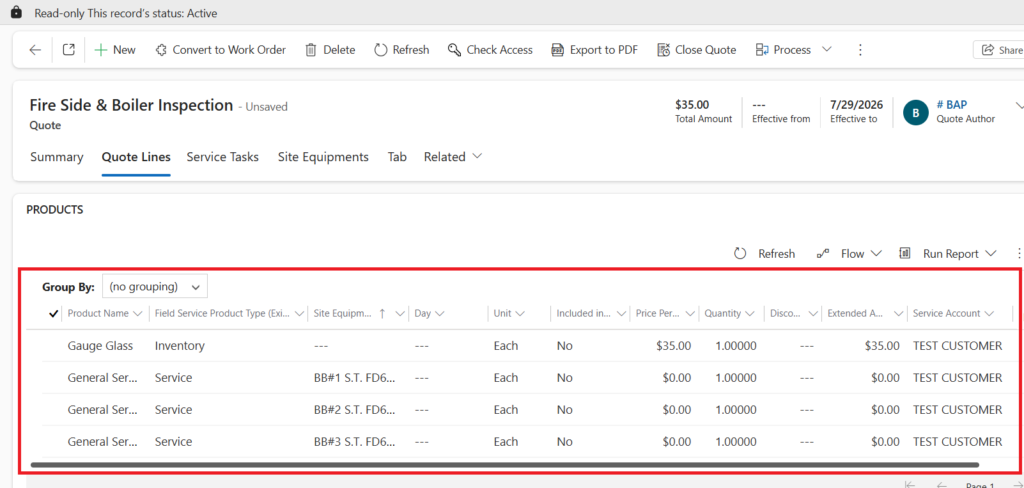
4. Custom “Generate Work Order” command button
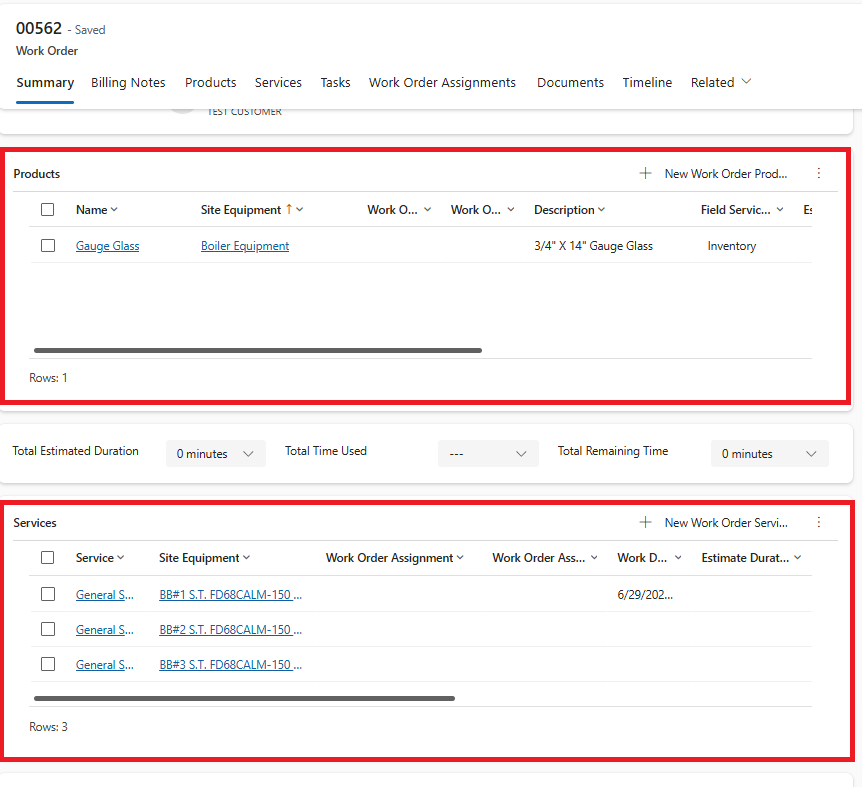
To complete the process, MTC built a custom command button — Generate Work Order — on the Quote form. When clicked, the button automated the creation of a new Work Order using:
- Quote header information
- Service account details
- Selected incident types
- Associated equipment context
- Quote lines derived from products and services
- Other required field mappings based on the client’s process

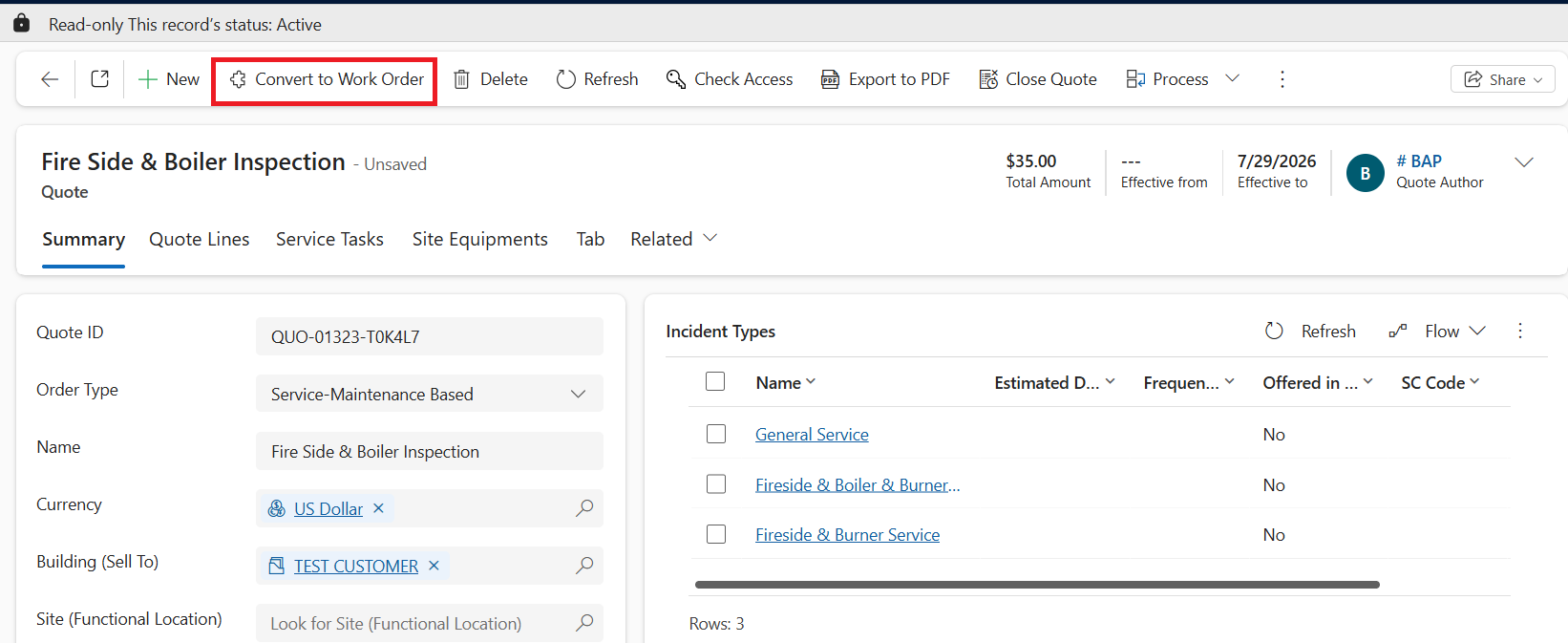
This removed the need for users to re-enter service details after quote approval. One click, full carry-forward, ready for scheduling.
5. Field mapping and operational details
The final piece was making sure the generated Work Order arrived ready for dispatch — populated correctly so that schedulers, dispatchers, and field technicians could pick it up without further manual cleanup. Mapping rules were defined so each generated work order carried the right service account, incident types, products, services, and equipment context into the right fields.
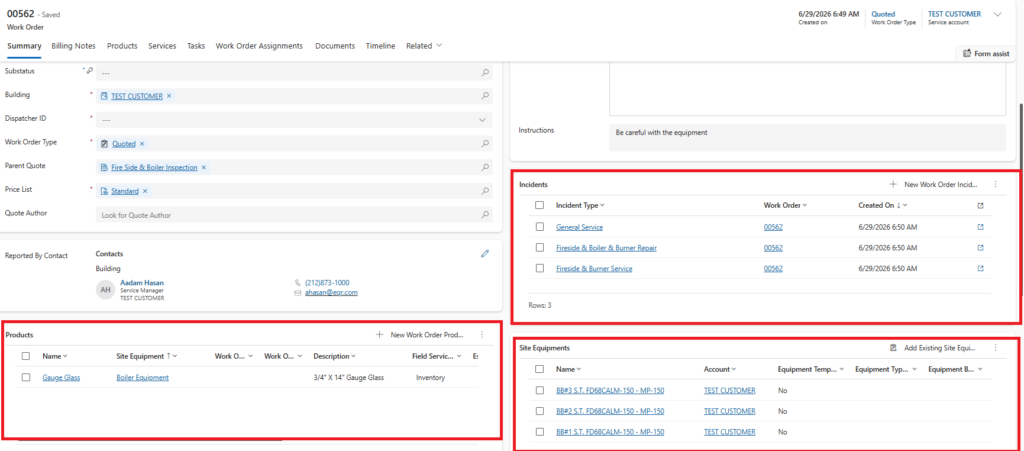
The End-to-End Process
The new flow runs like this:
- Sales or the service team creates a Quote for the HVAC customer.
- The user associates one or more Incident Types through the sub-grid on the Quote form.
- The system displays the related customer equipment for the selected service account.
- Quote lines are prepared from Incident Products and Incident Services.
- The user clicks Generate Work Order.
- The system automatically creates a Work Order with the operational details required for dispatch.
What used to be a handoff document and a rekeying exercise became a single button-click.
Business Benefits
The solution delivered measurable operational improvements across sales and service.
- Faster quote-to-service execution. The team moves from approved quote to work order much faster, reducing the delay before technicians can be dispatched.
- Reduced manual effort. Service coordinators no longer recreate work order information from quote documents.
- Better data consistency. Incident-driven structure ensures alignment between quoted scope and field execution.
- Improved asset visibility. Showing related equipment on the quote gives users better context and improves service accuracy from the start of the customer interaction.
- Lower risk of errors. Automation reduces the chances of missing products, labour items, or customer-specific details when creating work orders.
Outcome
By extending Dynamics 365 Field Service with a custom Quote-to-Work Order process, the HVAC client gained a connected workflow between sales and service operations that the standard product alone could not deliver. The solution allowed them to:
- Standardise how service work is quoted
- Improve visibility of customer equipment from the moment of the quote
- Accelerate work order generation and downstream dispatching
- Support a more scalable and efficient HVAC service operation
The result is fewer manual handoffs between sales and service, a tighter audit trail of what was promised versus what was delivered, and a clearer path to scaling the field service operation without scaling the back-office workload at the same rate.
Frequently Asked Questions
What do analysts predict for field service operational automation?
This kind of quote-to-dispatch automation is exactly what industry analysts have been pointing to. In August 2025, Gartner forecast that 40% of enterprise applications will integrate task-specific AI agents by the end of 2026, up from less than 5% in 2025. The shift this case study illustrates — automating a routine but error-prone handoff — is the foundational layer on which Field Service Copilot’s task-specific agents (Scheduling Operations Agent, mobile Copilot, asset intelligence) are now being layered. Get the workflow plumbing right first, and the AI features amplify it.
Can this Quote-to-Work Order pattern apply outside HVAC?
Yes. The pattern is industry-agnostic — anywhere a service business quotes scope and then dispatches technicians, the same gap exists between Quote and Work Order. The Incident Types, equipment context, and field mapping change to fit the industry (medical equipment, telecom, building services, manufacturing field service) but the architectural pattern carries over.
How long does an implementation like this take?
Engagement length depends on scope, but a focused quote-to-work-order automation like this typically runs in a multi-week sprint rather than a multi-month project. The key dependencies are the client’s Incident Type catalogue, equipment master data quality, and the specific field mapping rules. For an introduction to Dynamics 365 Field Service before scoping a customisation, see our What Is Dynamics 365 Field Service? A 2026 Guide.
Conclusion
This implementation shows how Dynamics 365 Field Service can be extended to support industry-specific scenarios where standard functionality alone does not match the operational reality. For an HVAC service provider, the difference between manual quote-to-work-order handoff and a single-click automated flow is the difference between coordinators chasing paperwork and coordinators dispatching technicians.
Need similar field service customisation for your business? MTC builds Dynamics 365 Field Service implementations and customisations for Microsoft partners and end users alike. Explore our Dynamics 365 Field Service services or email salesteam@mtccrm.com.